
Most packing advice is really luggage advice — buy this bag, use these cubes. That's useful, but it skips the harder question: what actually goes in it? After years of leading trips from desert camps to high-altitude teahouses, here's the system we tell every traveler before they book.
Pack in layers, not outfits
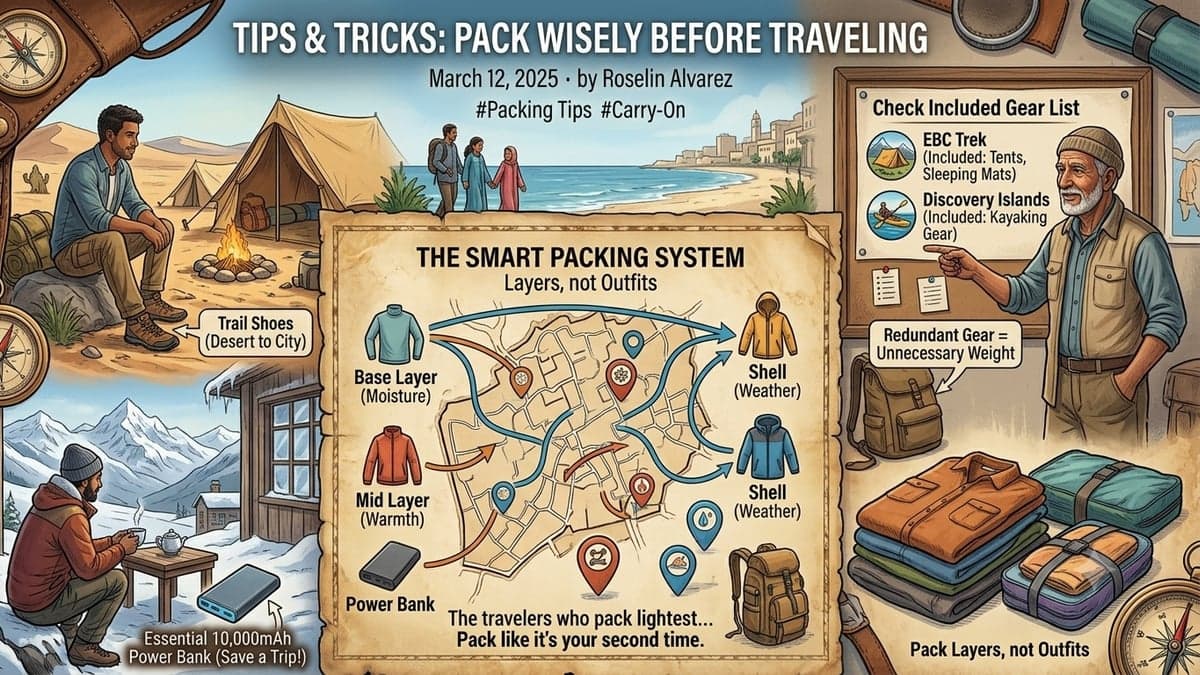
Instead of thinking "what will I wear on day 4," think in three layers: a base layer that manages moisture, a mid layer for warmth, and a shell for wind and rain. Three of each layer, mixed and matched, covers a wider temperature range than eight separate outfits — and weighs less.
One pair of shoes does more than you think
A well broken-in pair of trail shoes handles a city walking tour and a moderate day hike equally well. Save the second pair of shoes for something your trip specifically requires — reef shoes for a kayaking trip, insulated boots for Kilimanjaro — not "just in case."
The travelers who pack lightest are almost always the ones who've done the trip before. Pack like it's your second time, not your first.
Check the trip's included gear list first
Several of our multi-day treks and camping trips — the Everest Base Camp trek and the Discovery Islands kayaking tour among them — already include tents, sleeping mats, and cooking gear. Packing your own is not just unnecessary weight, it can mean carrying redundant equipment for a week. Always check what's listed under "Included" on the tour page before you start shopping.
The one thing worth overpacking
Batteries and power banks. Cold weather drains phone batteries fast, and remote lodges don't always have reliable outlets. A single 10,000mAh power bank has saved more trips than any other item on this list.